Questions about Dog Grooming? Chances are, someone else has already asked! “Dog Grooming FAQ | Easy Tips for Beginners” has answers to common dog grooming questions. And if you have a question that you need answered, reach out to us!
Can you groom your dog yourself?
Yes, you can groom your dog yourself. With the right tools, a bit of patience, and by following step-by-step instructions, it is possible to care for your dog’s coat at home. It is important to first familiarize yourself with your pet’s coat type since the grooming requirements and techniques for each coat type and breed can vary. You may have a short-coated breed that requires basic grooming attention, or you may have a long-haired or thick double-coated breed that will have specific and advanced requirements.
But regardless of where on the spectrum you find yourself on your grooming journey, there are some basic grooming tasks that apply to most breeds and coat types. Regular brushing, washing, and conditioning with quality products, and as well as being cautious when using the right tools for managing hair around sensitive areas like the ears, eyes, and paws are important.
Also, grooming procedures such as safely trimming or clipping the nails and cleaning the ears are essential. By educating yourself about the specific needs of your pet and by learning how to perform these grooming steps safely, you can help keep your dog comfortable and well-groomed.
Learn more on our page: Grooming Basics
How Do You Reduce Your Dog’s Shedding?
Shedding is natural and healthy for many dog breeds, but you can manage it at home with a few key steps:
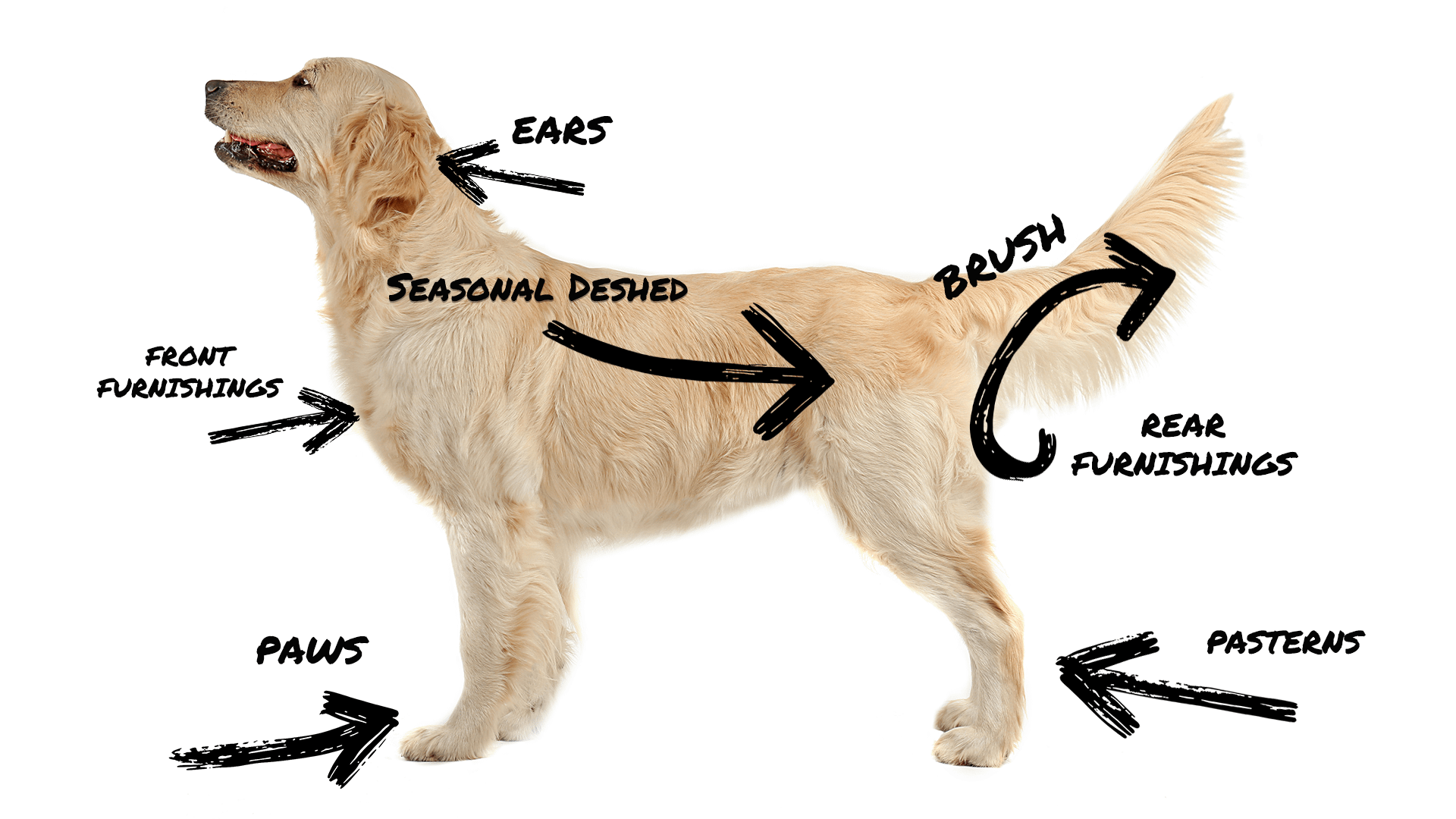
First, brush your dog in a space where you can easily collect and discard loose hair. Regular brushing removes shed fur, improves circulation, distributes natural oils, and promotes a healthy coat. Use the right tools for your dog’s coat, such as a rubber brush for short coats or a slicker brush for thicker, longer coats.
Second, proper nutrition is crucial. A diet rich in omega-3 fatty acids can improve coat health. Supplements like salmon oil help reduce excessive shedding.
Third, regular bathing, conditioning, and blow-drying help control shedding. Washing removes loose hair, while high-velocity blow-drying combined with brushing helps release more hair in a controlled setting, a technique often used by professional groomers.
By being proactive, you’ll have a cleaner home and a healthier pup!
Which Dogs Need Trimming?
To Dog coats fall into two categories: those with a determined (fixed) coat length and those with an undetermined (continuous growing) coat length.
Determined Coat Length
Breeds like Beagles, Huskies, Corgis, Dachshunds, and Labrador Retrievers have coats that stop growing at a certain length due to genetics. Even with variations, like longer feathering on Golden Retrievers or Spaniels, these dogs require minimal trimming. They benefit from sanitary and paw-pad trims for hygiene.
Undetermined Coat Length
Dogs with continuously growing coats, such as Poodles, Maltese, and Shih Tzus, need regular trimming. These breeds are usually single-coated, meaning they lack a thick undercoat. Grooming varies from full haircuts and sculpting (like Poodles) to maintaining the ends of drop coats (like show-trimmed Maltese or Shih Tzus).
For these breeds, regular trims keep the coat manageable. Coat textures differ widely, from a Poodle’s curly, springy coat to a Maltese’s silky, straight hair. Many owners opt for a puppy cut, where the body is clipped to a short or medium length (10-25mm), with the head and face styled to match.
How do you de-shed a dog?
To de-shed a double-coated dog, use the right methods and tools to remove loose undercoat naturally. Shedding varies by season and coat life stage. De-shedding controls this process, preventing excess hair in your home and reducing matting.
If your dog has a double coat, follow these steps:
- Preparation: Brush your dog in a comfortable space where you can easily collect and discard loose fur. If your dog is nervous, ask someone familiar to assist or use a grooming table with a loop for control. Positive reinforcement helps make the process enjoyable.
- Use the Right Tools: A slicker brush and metal comb are essential for de-shedding. Thick-coated breeds like Samoyeds and Alaskan Malamutes may need brushing every few days, while Labradors require less frequent grooming. Coat care also depends on the season. Additional de-shedding tools and rakes are available for different coat types and lengths.
- Technique: Always brush, comb, or rake in the direction of hair growth with light pressure. Work in sections, lifting the coat to reach the roots without scratching the skin. Use a metal comb to check your work, starting with a wide-tooth comb and finishing with a finer-toothed one.
- Regular Grooming: Bathing, conditioning, and high-velocity drying every 4 to 8 weeks effectively remove loose undercoat. Professional groomers often use high-velocity dryers before bathing to blow out dead hair and dander, making de-shedding more thorough.
Note: Not all dog breeds require de-shedding. Always confirm your dog has a double coat before using de-shedding tools.
Learn more on our page: Brushing your dog’s coat
What does it typically cost to have a dog groomed professionally?
The cost of professional dog grooming varies based on the service complexity and time required. A small, short-coated dog needs basic grooming—bath, brush, nail trim, and ear cleaning—while a larger, double-coated breed or a dog requiring intricate styling demands more time and expertise.
Other cost factors include the groomer’s location, reputation, and service type (e.g., mobile grooming). Beyond basic grooming, additional services like teeth brushing, de-matting, gland expression, and specialized treatments also increase the price.
Grooming costs range widely. A short-haired Chihuahua may cost around €30 for a basic salon visit, while a Newfoundland or Standard Poodle needing extensive de-matting or hand-scissoring could exceed €200.
Many pet owners reduce grooming expenses by learning to groom at home. While it may seem challenging, home grooming allows owners to tailor care to their pet’s breed and coat type while strengthening their bond. Researching proper grooming techniques ensures your dog’s coat stays healthy and well-maintained
What does a dog groomer earn per hour?
MMost dog groomers earn commission rather than an hourly wage, typically receiving 30% to 60% of the grooming service cost. The exact earnings depend on experience, salon location, reputation, and service pricing.
Because grooming rates vary, commission-based pay can fluctuate. However, skilled groomers who refine their techniques and build a loyal client base can achieve a stable and respectable income.
What do you need to groom?
The grooming tools you need depend on your pet’s coat type. Beyond nail, ear, and teeth care, every pet owner should understand their dog’s specific grooming needs. Most dogs fall into one of these categories:
- Bath & Brush
- Bath, Brush & Light Trimming
- Bath, Brush & Full Haircut
- Bath, Brush & Special Service (e.g., cording or hand-stripping)
For any grooming routine, set up a comfortable workspace. A grooming table with an arm and loop ensures stability for both you and your pet. Depending on the coat type, essential tools include:
✅ Brush suited for your dog’s coat
✅ Comb for detangling and finishing
✅ Clippers/Trimmers for paws and hygiene areas
✅ Specialized tools & products based on coat needs
Having the right setup and tools makes grooming easier, safer, and more effective.
Is it ok to shave every dog?
Shaving a dog close to the skin is an extreme measure and should only be done after a professional confirms it’s necessary. A dog’s coat protects against heat, cold, and environmental factors, making shaving risky, especially for thick double-coated breeds.
For most dogs, trimming is a better option. Many breeds need sanitary and paw-pad trims for hygiene, while others benefit from silhouette shaping. Breeds that require full haircuts, like Poodles and Bichons, should have their coats trimmed rather than shaved to maintain coat health and texture.
When in doubt, consult a professional to ensure your pet’s coat stays healthy and well-maintained.
How long does it take to groom a dog?
How long it takes to groom a dog will depend on many factors, such as the size of the dog, the coat type, the coat condition, the brushing or styling requirements, and the temperament of the dog. A short-coated, well-behaved small dog may take 30-45 minutes for a full grooming session, while a large dog with a thick coat, or a dog with complex styling, or a special-needs pet will take longer, with grooming sessions lasting many hours.
Are There Certain Times of the Year When Dogs Need More Grooming?
Dogs need year-round grooming, regardless of coat type. Basic care—including nail trimming, eye care, ear cleaning, and dental maintenance—applies to all dogs.
Single-layer coated dogs, often referred to as dogs with “hair,” require regular haircuts every 4 to 8 weeks, depending on coat length and condition.
Shedding breeds need more frequent brushing in spring and fall when their coats go through seasonal changes. Additionally, all dogs benefit from paw pad and sanitary trims to maintain cleanliness throughout the year.
What is the hardest part of being a dog groomer?
Dog grooming is rewarding but comes with challenges. It’s a physically demanding job, requiring bending, lifting, and handling unpredictable animals. Over time, full-time grooming takes a toll, making physical self-care essential.
Beyond the physical aspect, groomers face emotional challenges. They form connections with clients and often share in the stress of pets experiencing health or behavioral issues.
Despite these difficulties, grooming remains a fulfilling profession, bringing joy to both pets and their owners.
What length should you trim or shave a dog?
Shaving a dog to the skin is an extreme action that should only be considered if the pet has a coat that can tolerate shaving (such as single coated dogs like Poodles) and that you have determined that shaving is the last resort due to medical issues, such as severe matting. Dogs that require haircuts should be kept in a length that matches the lifestyle of the client.
Dogs that are brushed often and have regular grooming sessions can be kept longer if desired. Dogs that are not brushed often and are not given regular grooming attention should be kept shorter so that the coat does not become matted and cause any pain for the pet. Important note: Some breeds, especially thick double-coated breeds (like Siberian Huskies) should never have their body hair shaved due to the damage that can be done to that type of coat. Reserve any trimming to small, detailed areas like paw-pads and sanitary areas for breeds that are not candidates for full-body haircuts.
Should dogs be bathed before shaving or trimming?
When preparing to shave a dog, the question of bathing before or after shaving depends on how short you are planning to shave. For shaving to the skin, which is reserved for only the most extreme circumstances, such as severe matting, and only for a small group of breeds and mixes, the coat should be shaved *before* washing. But for haircuts on a coat that is easily brushed, and any tangles are far from the skin, the coat should be properly washed, dried, and fluffed before clipping or trimming.
Note, if you are only doing a quick “spot-shave” around certain areas of the pet, such as paw-pads, a full bath and prep is not necessary.
Can you shave every dog?
Not every dog should be shaved! Dog grooming questions often include whether shaving is safe, but for some breeds, it can cause irreversible coat damage. Many dogs rely on their coats for insulation and protection. Even if your pet’s breed allows shaving, it’s best to leave some length, often referred to as a puppy cut. Consult a professional groomer to find the best plan for your dog’s health and comfort. If grooming at home, research your pet’s specific needs.
Common Coat Types and Their Grooming Needs
Thick Double Coats
Breeds like Huskies, Samoyeds, and Pomeranians have dense double coats designed for insulation. Regular brushing prevents matting and improves air circulation. Shaving is never recommended as it disrupts the coat’s natural cycle and protective function.
Single Coats (Curly & Silky)
Single-coated dogs, like Poodles (curly) and Maltese (silky), have hair that keeps growing until trimmed. These coats require regular grooming and brushing to prevent matting. If matting becomes severe, shaving may be necessary but won’t cause lasting coat damage.
Silky Coats
Breeds like Yorkshire Terriers and Afghan Hounds have fine, flowing coats that require frequent brushing to avoid tangles. While some silky-coated dogs are left in a natural style, many Yorkies receive puppy cuts. Shaving should be avoided unless necessary.
Wire Coats
Wire-haired breeds, such as Norwich Terriers and Irish Wolfhounds, have a coarse topcoat and soft undercoat. Proper grooming involves hand-stripping to encourage healthy coat regrowth. Shaving can soften the texture and reduce its protective properties, but some owners opt for clipping due to cost and maintenance.
Short-Haired Coats
Short-haired breeds, like Labrador Retrievers and Doberman Pinschers, have low-maintenance double coats that still shed. Regular brushing helps control shedding. Shaving is not recommended unless prescribed by a veterinarian.
Mixed Coats
Mixed-breed dogs often have varying coat characteristics, requiring a tailored approach to grooming. If unsure, consult a professional groomer to determine the best method for coat maintenance.
Corded Coats
Breeds like the Puli and Komondor develop naturally corded coats that require dedicated maintenance. Cords need regular separation and trimming. While these coats resemble curly-coated breeds like Poodles, shaving is an option if necessary.
How long does it take to groom a dog?
The time required to groom a dog can vary greatly depending on a number of factors, such as the size of the dog, the type of coat, the condition of the coat, and the complexity of the groom. A small dog with a short coat can take 30-45 minutes to groom professionally from start to finish, while a large dog with a thick or long coat can take many hours. A grooming professional can give you an estimate after a consultation. For home groomers, the time to groom a dog will depend on the equipment available for the work, as well as the expertise of the owner.