Spring is the time when our double-coated breeds start to shed their Winter coats—and most pet owners focus on de-shedding to (frankly) keep their homes free of fuzz. But that’s not the only grooming issue going on during this glorious time of the year. Dematting dogs in spring is just as important, as loose undercoat, moisture, and increased outdoor activity can quickly turn small tangles into painful mats.
As temperatures rise, many dogs not only begin shedding their winter coats, but they typically spend more time outdoors. Add rain, humidity, mud, and increased activity, and suddenly mats can appear faster than most owners expect. In fact, Spring is one of the busiest and trickiest seasons for dog grooming.
As a professional groomer, spring is when I see the most matting problems. Dogs transitioning between winter and summer coats are especially prone to tangles, and moisture from rain or wet grass can tighten small knots into painful mats. The good news is that with the right approach, many mats can be safely managed at home—and even better, prevented altogether.
Let’s look at why matting happens in spring and how you can keep your dog’s coat healthy and comfortable.
What Are Dog Mats and Why Are They Harmful?
A mat is a tightly tangled section of fur where loose hair becomes trapped and twisted together. Mats often form close to the skin, making them difficult—and sometimes painful—to remove.
While mats might seem like a cosmetic issue, they can actually cause serious problems for dogs.
Common problems caused by matting
- Skin irritation and inflammation
- Trapped moisture leading to bacterial infections
- Restricted airflow to the skin
- Pulling and discomfort during movement
- Hidden parasites or debris
In severe cases, mats can tighten so much that they restrict circulation or create sores underneath.
Professional Groomer Tip:
Small tangles can turn into tight mats in just a few days—especially during shedding season. Early detection is the best prevention.
Why Dogs Get More Mats in Spring?
Spring creates the perfect storm for matting because several factors happen at once.
Shedding Undercoat
Many dogs begin shedding their winter coat, especially double-coated breeds. When loose undercoat isn’t removed regularly, it gets trapped within the outer coat and forms mats.
Breeds commonly affected include:
- Golden Retrievers
- Australian Shepherds
- Pomeranians
- Border Collies
- Doodles and double-coated designer mixes
Rain and Humidity
Moisture causes hair strands to swell and tangle more easily. When dogs stay damp after rain or baths, mats can tighten quickly.
Mud and Outdoor Play
Spring means more time outdoors. Dirt, debris, and burrs easily become trapped in longer coats, especially around:
- legs
- belly
- tail
- chest
Harnesses and Rain Jackets
Harness straps and rain jackets create friction points, which are common matting areas.
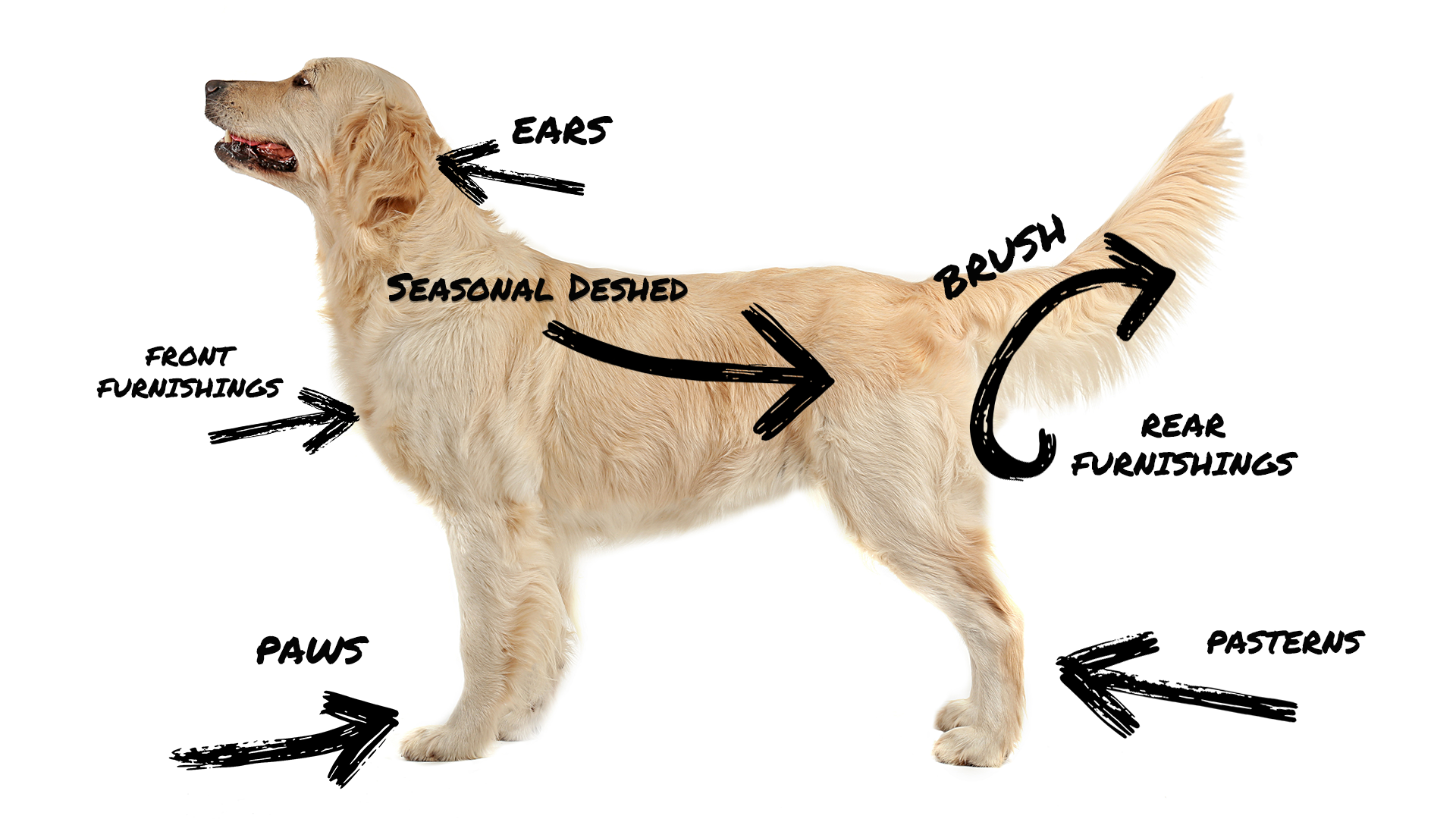
The most frequent spots groomers see mats in spring include:
- behind the ears
- under the collar
- armpits
- chest
- back legs
How to Safely Demat a Dog at Home?
Dematting requires patience and a gentle approach. Pulling too hard or rushing the process can hurt your dog and damage the coat.
Step-by-Step Dematting Process
1. Start With a Calm Dog
Choose a quiet time when your dog is relaxed. Some owners find success after a walk or light exercise.
2. Apply a Detangling Spray or Conditioner
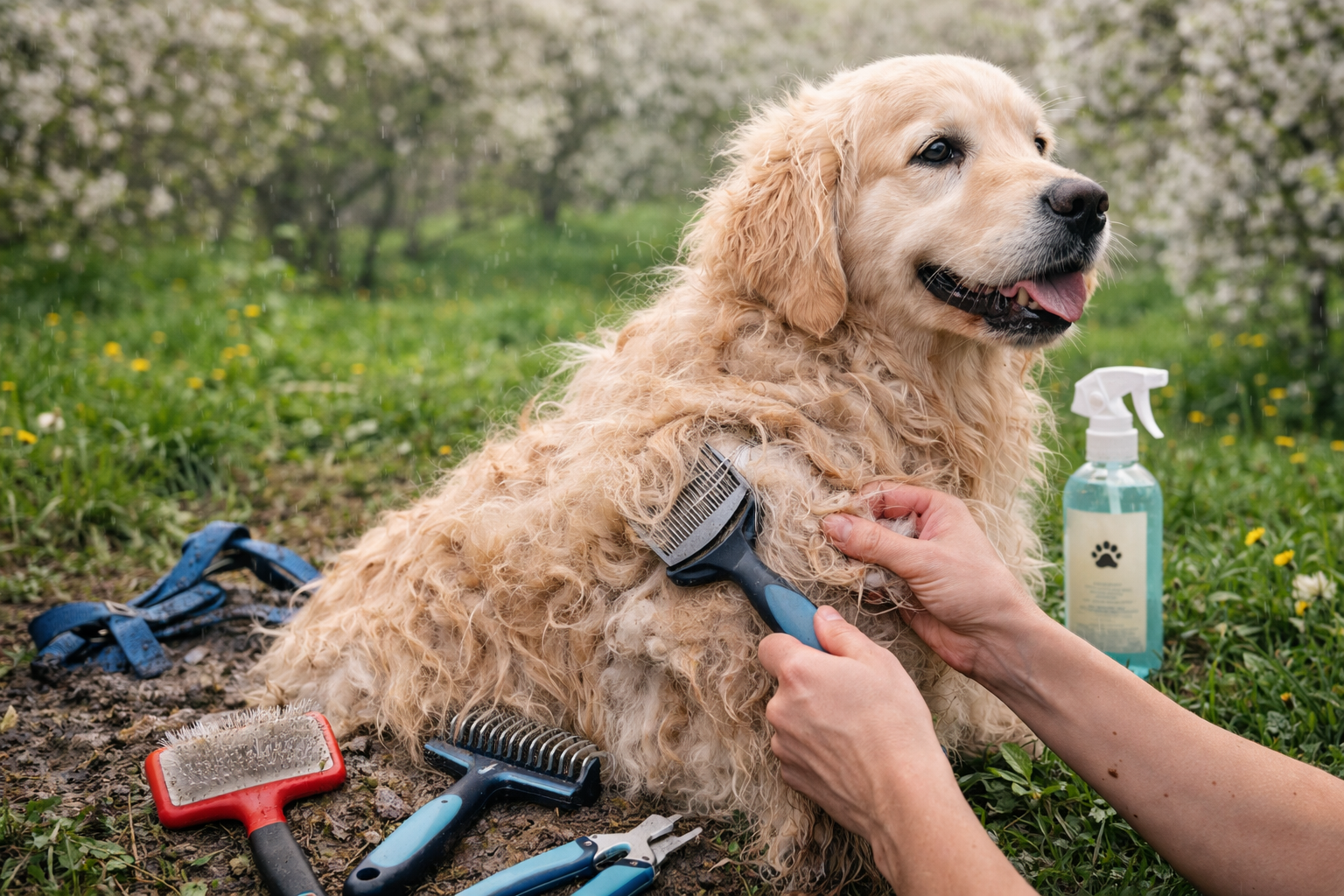
Lightly mist the tangled area with a dog-safe detangling spray or leave-in conditioner. This lubricates the hair and reduces pulling.
3. Separate the Mat With Your Fingers
Before using tools, gently loosen the mat with your fingers. Breaking it into smaller sections makes it easier to remove.
4. Work From the Outside In
Using a slicker brush or dematting comb, begin at the edges of the mat, slowly working inward toward the skin.
5. Hold the Hair Near the Skin
Place your fingers between the mat and your dog’s skin to reduce pulling and discomfort.
6. Take Breaks
Dematting large areas can take time. Give your dog breaks to keep the experience positive.
Professional Groomer Tip:
Never brush directly into a tight mat without loosening it first. This can pull the skin and cause pain.
Tools Commonly Used for Dematting
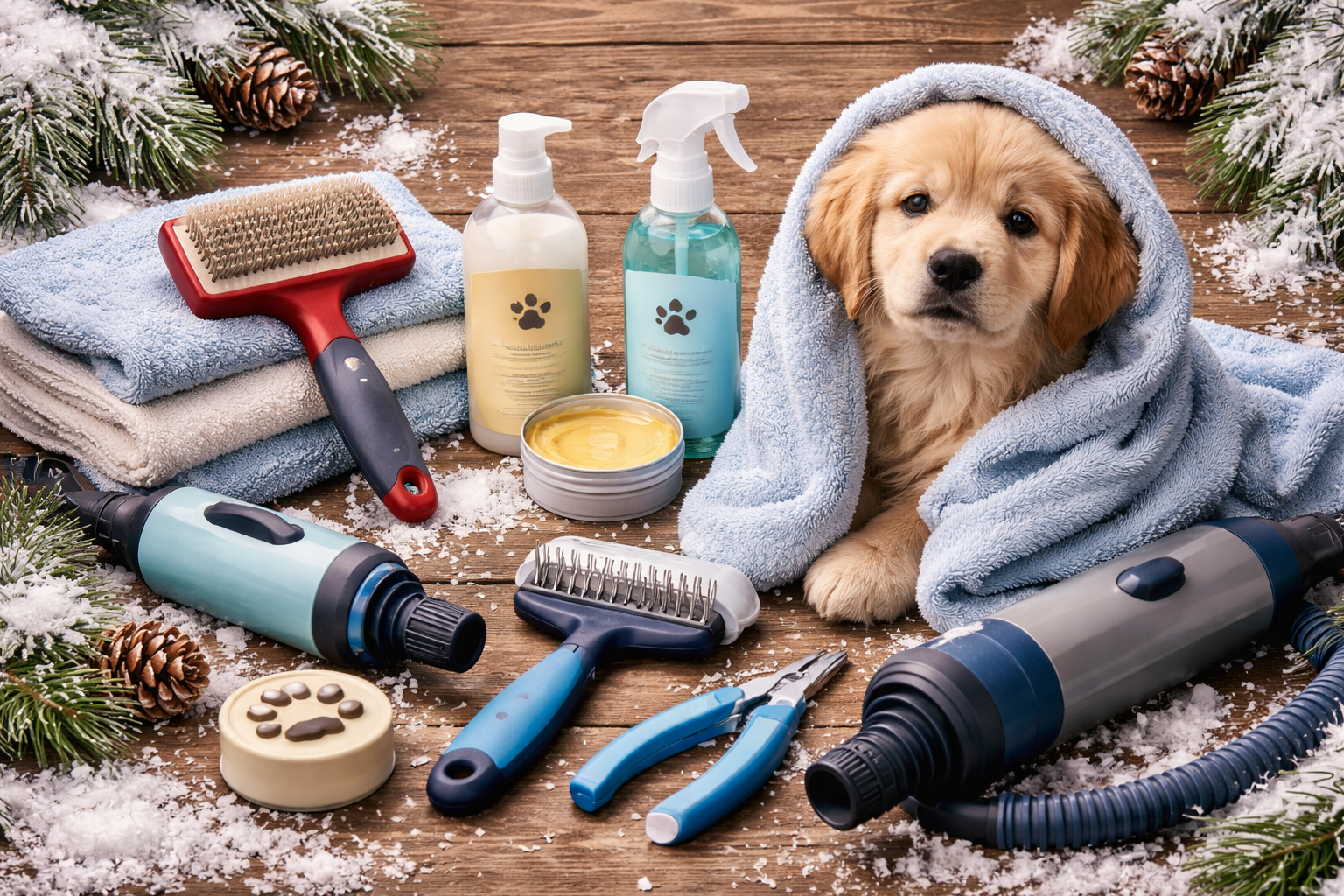
Having the right tools makes a huge difference when dealing with tangles and mats.
Slicker Brush
What it does:
A slicker brush removes loose hair and small tangles while smoothing the coat.
When to use it:
- light tangles
- daily brushing
- finishing after dematting
Common mistakes:
- brushing too aggressively
- pressing too hard on the skin


Professional Groomer Tip:
Check your brush work with a basic metal comb, start with the wider spaced teeth and finish with the finer side. This will really up your dematting and de-shedding game! [[Andis 7.5in metal comb: https://amzn.to/3VF3Qyr%5D%5D
Dematting Comb
What it does:
Dematting combs have specially designed blades that help break apart stubborn mats.
When to use it:
- medium to tight mats
- thick coats
- areas with trapped undercoat
Common mistakes:
- cutting through mats too quickly
- using the tool too close to the skin


Undercoat Rake
What it does:
An undercoat rake removes loose undercoat that often contributes to matting.
When to use it:
- double-coated dogs
- heavy shedding periods
- seasonal coat transitions
Common mistakes:
- using it too frequently
- dragging it across already matted areas


Detangling Spray
What it does:
Adds lubrication to the coat, helping brushes glide through hair without pulling.
When to use it:
- before brushing
- during dematting
- after bathing
Common mistakes:
- using human hair products
- oversaturating the coat


When Mats Are Too Severe to Fix at Home?
Some mats are simply too tight or too close to the skin to safely remove without professional tools.
Signs you should visit a professional groomer include:
- mats that feel hard or tight against the skin
- large areas of matting
- mats causing skin redness or sores
- a dog that becomes stressed or painful during brushing
Professional groomers often use specialized clippers and techniques to remove severe matting safely.
Professional Groomer Tip:
Attempting to cut mats with scissors at home is extremely risky. Many grooming injuries happen this way. If you need to “cut” out a matting, make sure to use a clipper and verify that your pet’s coat can recover from any shaving.


Trimmer
How to Prevent Spring Matting in Dogs
Prevention is always easier than dematting.
A simple grooming routine can dramatically reduce matting during spring.
Brush Regularly
- Long coats: daily or every other day
- Medium coats: 3–4 times per week
- Double coats: weekly undercoat maintenance
Dry Your Dog After Rain
After wet walks or playtime, towel dry the coat and brush lightly once dry. Blow drying is optimal, and there are many affordable options available.


Check Friction Areas
Pay extra attention to:
- behind ears
- under legs
- collar area
- chest
These spots mat first.
Schedule Regular Grooming
Professional grooming every 4–8 weeks helps manage coat transitions and prevent mat buildup.
Maintain a Clean Coat Clean coats tangle less than dirty ones. Dirt and oils cause hair strands to stick together.
Final Thoughts
Spring can be challenging for dog coats, but regular grooming makes a huge difference. By brushing consistently, managing moisture, and using the right dematting tools, you can prevent painful tangles before they start.
A well-maintained coat isn’t just about appearance—it protects your dog’s skin, improves comfort, and keeps seasonal coat changes healthy.
With a little patience and routine care, your dog can stay mat-free and comfortable all spring long. We love that. 🐾✂️
#petgroomingpost