

Dogs can have a ton of fun during the colder months of the year, but from a grooming perspective, winter can be tough on your dog’s coat, skin, and paws. Cold temperatures, dry indoor air, and, in especially frigid regions, snow, ice, and road salt all create challenges that don’t exist during warmer months. A proper winter grooming routine—and the right tools—can make the difference between a healthy, comfortable dog and one dealing with dry skin, matting, cracked paws, and discomfort.
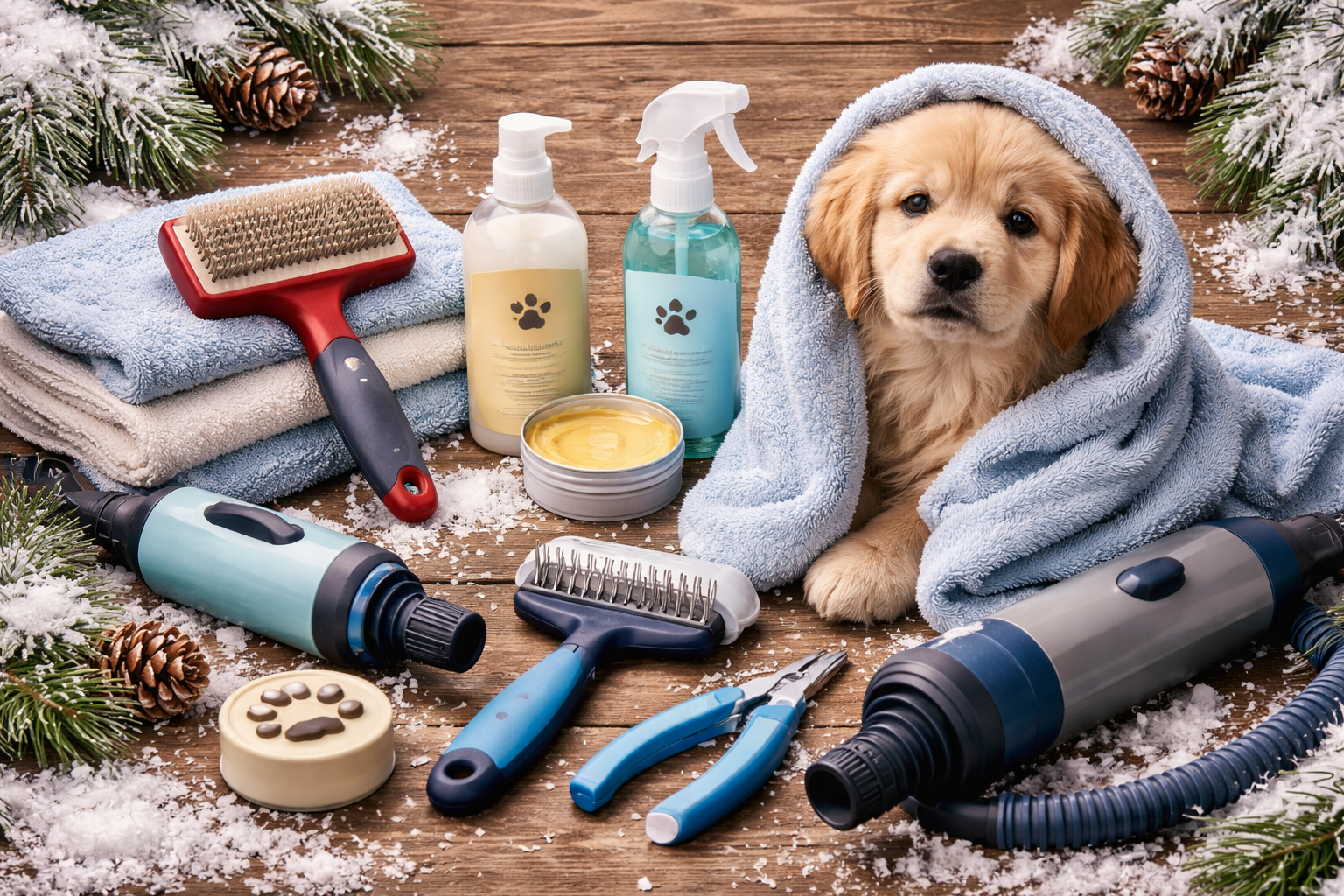
Below is our professional groomer–approved guide to the essential grooming tools every dog owner should have for winter care, including how to use them safely and effectively.
Why Winter Grooming Requires Special Tools
During winter, dogs experience:
- Dry skin and dandruff from cold air and indoor heating
- Increased matting from coats, sweaters, and harness friction
- Static buildup in the coat
- Paw problems from ice, snow, and de-icing chemicals
- Longer nail growth cycles due to reduced outdoor activity
Only using tools suitable for summer—or skipping grooming altogether—often makes these problems worse.
1. Slicker Brush
What it does:
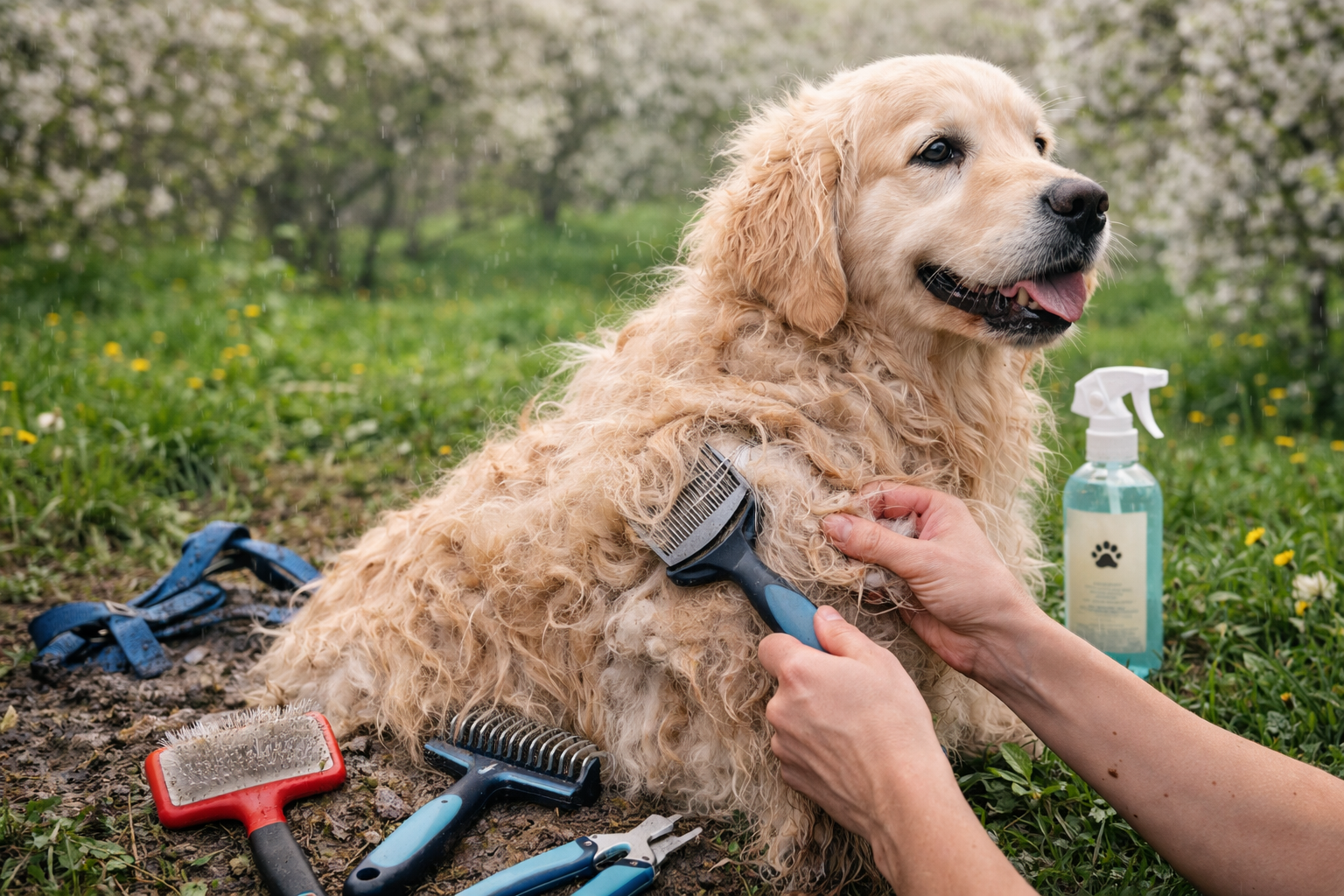
A slicker brush removes loose hair, light tangles, and surface mats.
Why it’s essential in winter:
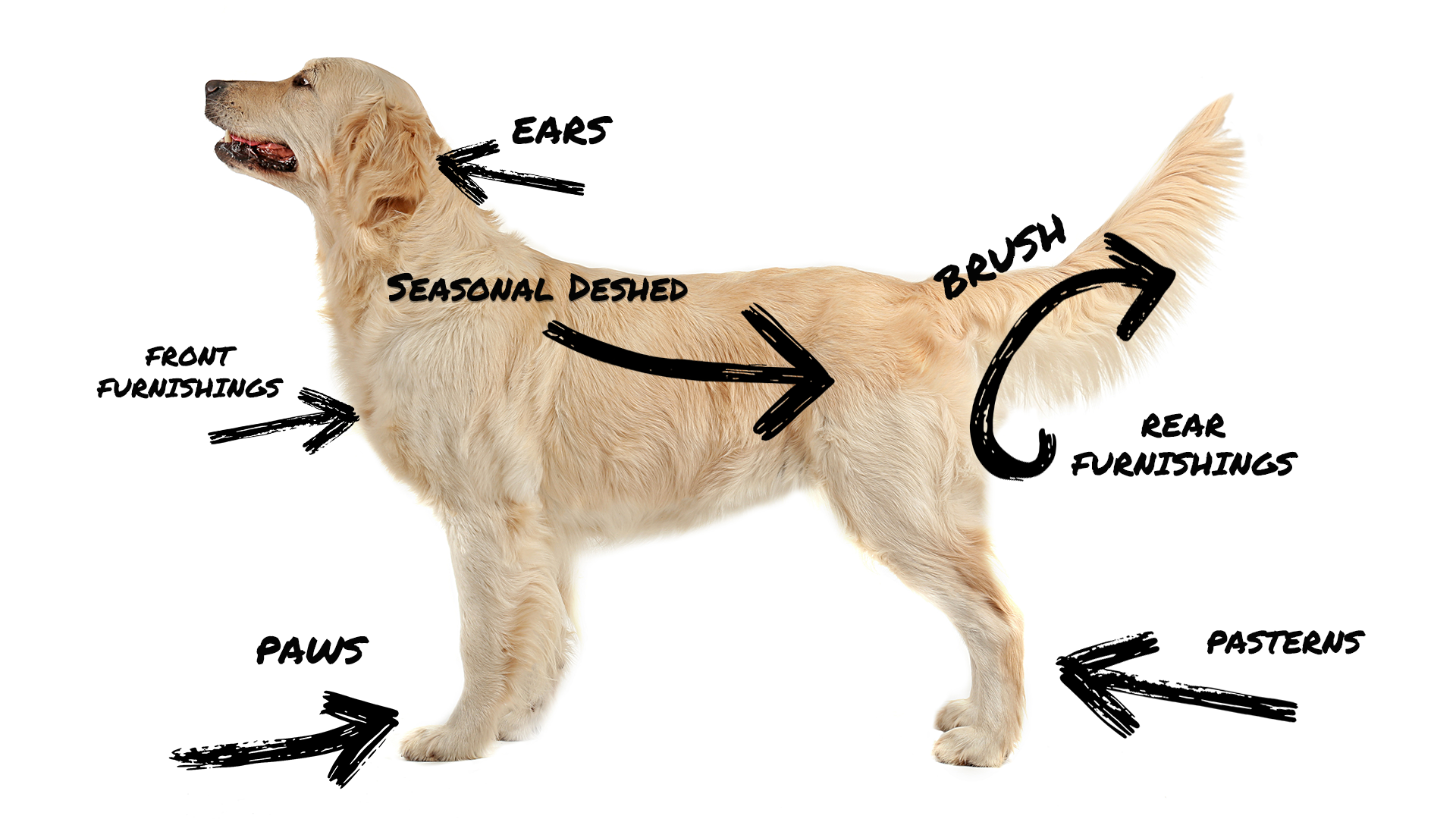
Winter coats mat more easily, especially behind the ears, under the legs, and around collars when exposed to rain or snow. Regular slicker brushing prevents tight mats that trap moisture and irritate skin.
Best for:
- Curly and wavy coats
- Long-haired breeds
- Wire-coated breeds
- Dogs wearing sweaters or jackets
How to use it safely:
- Brush gently in short strokes
- Focus on friction areas
- Use a brushing aid spray to help the brush glide through the coat
- Brush 3–4 times per week
- Check any brush work gently with a metal comb
Common mistake:
Brushing too aggressively, which can cause brush burn on dry winter skin.


2. Undercoat Rake or Deshedding Tool
What it does:
Removes dead undercoat without damaging the topcoat.
Why it’s essential in winter:
Many dogs still shed in winter, but loose undercoat can get trapped, causing overheating indoors and matting.
Best for:
- Double-coated breeds
- Heavy shedders
How to use it safely:
- Use once or twice a week
- Work in the direction of hair growth
- Stop if you see or feel signs of discomfort
Common mistake:
Overusing deshedding tools, which can thin the coat and damage insulation.


3. Moisturizing Dog Shampoo
What it does:
Cleans the coat while preserving natural oils.
Why it’s essential in winter:
Harsh shampoos strip oils, making winter dryness and flaking worse.
Best for:
- Dogs with dry or itchy skin
- Dogs bathed less frequently in winter
How to use it safely:
- Bathe every 4–6 weeks unless advised otherwise
- Rinse thoroughly to prevent residue
Common mistake:
Bathing too often or using human shampoo.


4. Dog Conditioner or Leave-In Coat Spray
What it does:
Adds moisture, reduces static, and prevents matting.
Why it’s essential in winter:
Conditioners help restore hydration lost to cold air and heating systems.
Best for:
- Long and curly coats
- Dogs prone to mats or static
How to use it safely:
- Apply lightly after bathing or before brushing
- Avoid over-saturating the coat
Common mistake:
Skipping conditioner altogether, especially on long-coated dogs.


5. Paw Balm or Paw Protection Tools
What it does:
Creates a protective barrier on paw pads.
Why it’s essential in winter:
Salt, ice, and freezing surfaces can crack and burn paws.
Best for:
- Urban dogs
- Dogs walking on treated sidewalks
How to use it safely:
- Apply before and after walks
- Wipe paws clean before reapplying
Common mistake:
Ignoring paws until cracking or bleeding occurs.


6. Nail Clippers and/or Nail Grinder
What it does:
Keeps nails at a healthy length.
Why it’s essential in winter:
Dogs often wear nails down less during winter due to fewer long walks.
Best for:
- All dogs
How to use it safely:
- Trim or grind every 2–4 weeks
- Take small amounts off at a time
Common mistake:
Waiting until nails click on the floor before trimming.


7. Dog Dryer or Absorbent Drying Towel
What it does:
Removes moisture quickly after baths or snow play.
Why it’s essential in winter:
Wet coats can cause chilling, hot spots, and skin infections.
Best for:
- Long or thick-coated dogs
- Dogs that play in snow
How to use it safely:
- Use low heat and moderate airflow
- Keep the dryer moving
Common mistake:
Air-drying in cold rooms or using high heat too close to the skin.


Tools to Avoid or Use With Caution in Winter
- Blades that shave double coats
- Overpowered deshedding tools used too frequently
- Harsh shampoos or degreasers
These can damage coat structure and reduce your dog’s natural insulation.
Professional Groomer Tips for Winter Tool Use
- Brush more often, bathe less
- Moisture is key—conditioner matters in winter
- Focus on friction areas daily
- Adjust grooming frequency based on coat type, not season alone
Final Thoughts
Winter grooming isn’t about doing less—it’s about using the right tools with the right technique. With proper brushing, moisturizing, paw protection, and nail care, your dog can stay comfortable, healthy, and mat-free all winter long.
Consistency, gentleness, and coat-type awareness are the keys to successful winter grooming. Thanks for living the groom with us, even when it’s chilly out there!
#petgroomingpost

Leave a Reply