

When summer temperatures soar, it’s natural to want to do everything possible to keep your dog cool and comfortable. One of the most common questions groomers hear is:
“Should I shave my dog for the summer?”
At first glance, the answer seems obvious. If you’re hot in a winter coat, wouldn’t your dog feel cooler without all that fur?
Surprisingly, the answer is often no.
Whether shaving your dog is helpful or harmful depends entirely on the type of coat your dog has. Understanding the difference between coat types can help you make the best decision for your pet’s comfort, health, and long-term coat quality.
Why Your Dog’s Coat Matters
Not all dog coats work the same way.
Some dogs have natural coats that stop growing once they reach a certain length. Others have coats that continue growing throughout their lives unless they are trimmed.
This difference determines whether shaving is appropriate—or something you should avoid whenever possible.
Double-Coated Dogs: Nature’s Built-In Air Conditioner
Many popular breeds have what’s called a double coat, consisting of:
- A soft insulating undercoat
- A protective outer coat (guard hairs)
Together, these two layers help regulate your dog’s body temperature throughout the year.
In the winter, they provide insulation against the cold.
In the summer, they actually help keep your dog cooler by creating an insulating layer that slows heat transfer while protecting the skin from direct sunlight.
Some common double-coated breeds include:
- Labrador Retrievers
- Golden Retrievers
- German Shepherds
- Siberian Huskies
- Border Collies
- Australian Shepherds
- Bernese Mountain Dogs
- Shetland Sheepdogs
- Akitas
- Great Pyrenees
Although these dogs shed heavily in spring and early summer, their coats are specifically designed to adapt to warmer weather.

Instead of shaving them, the best way to help them stay cool is to:
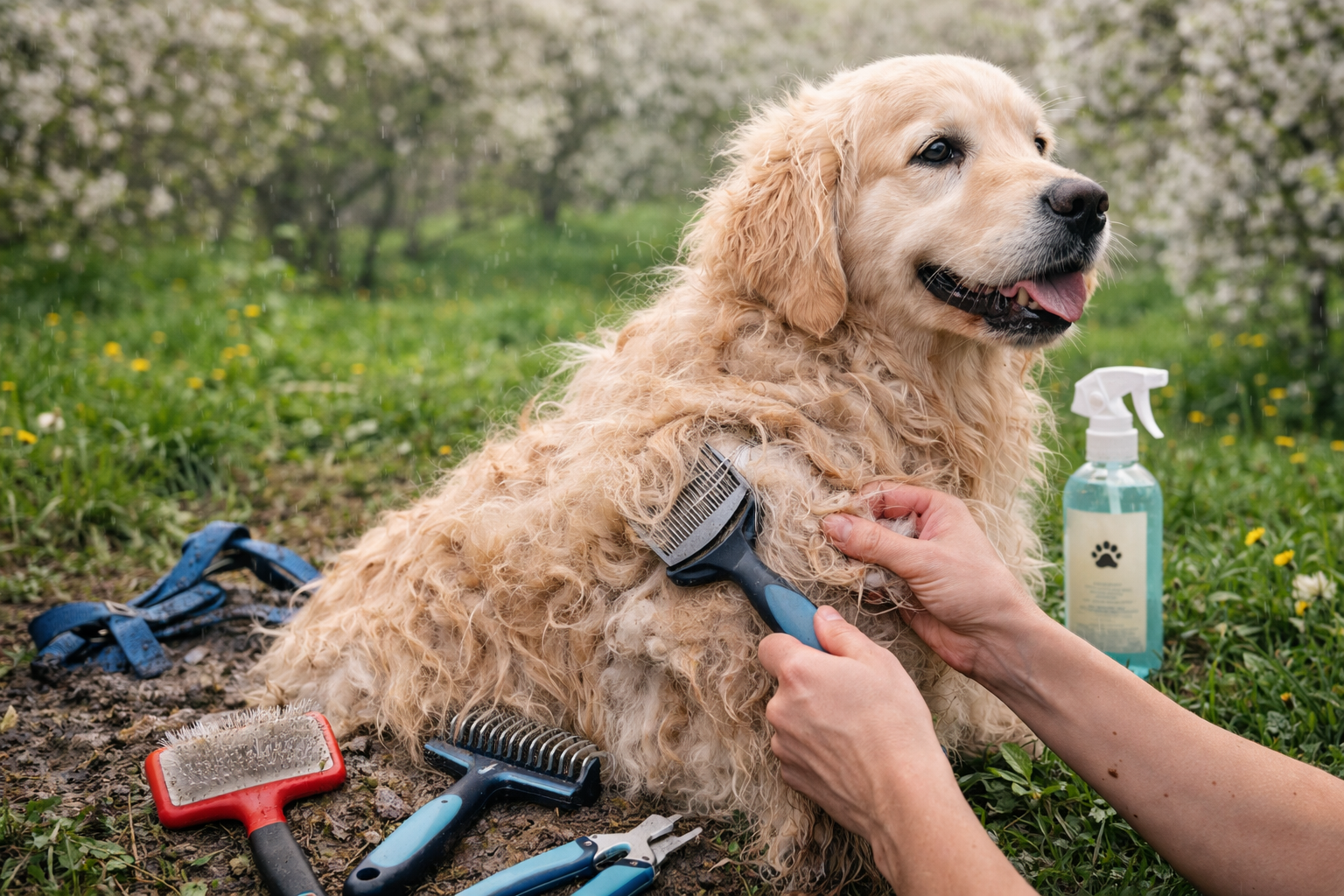
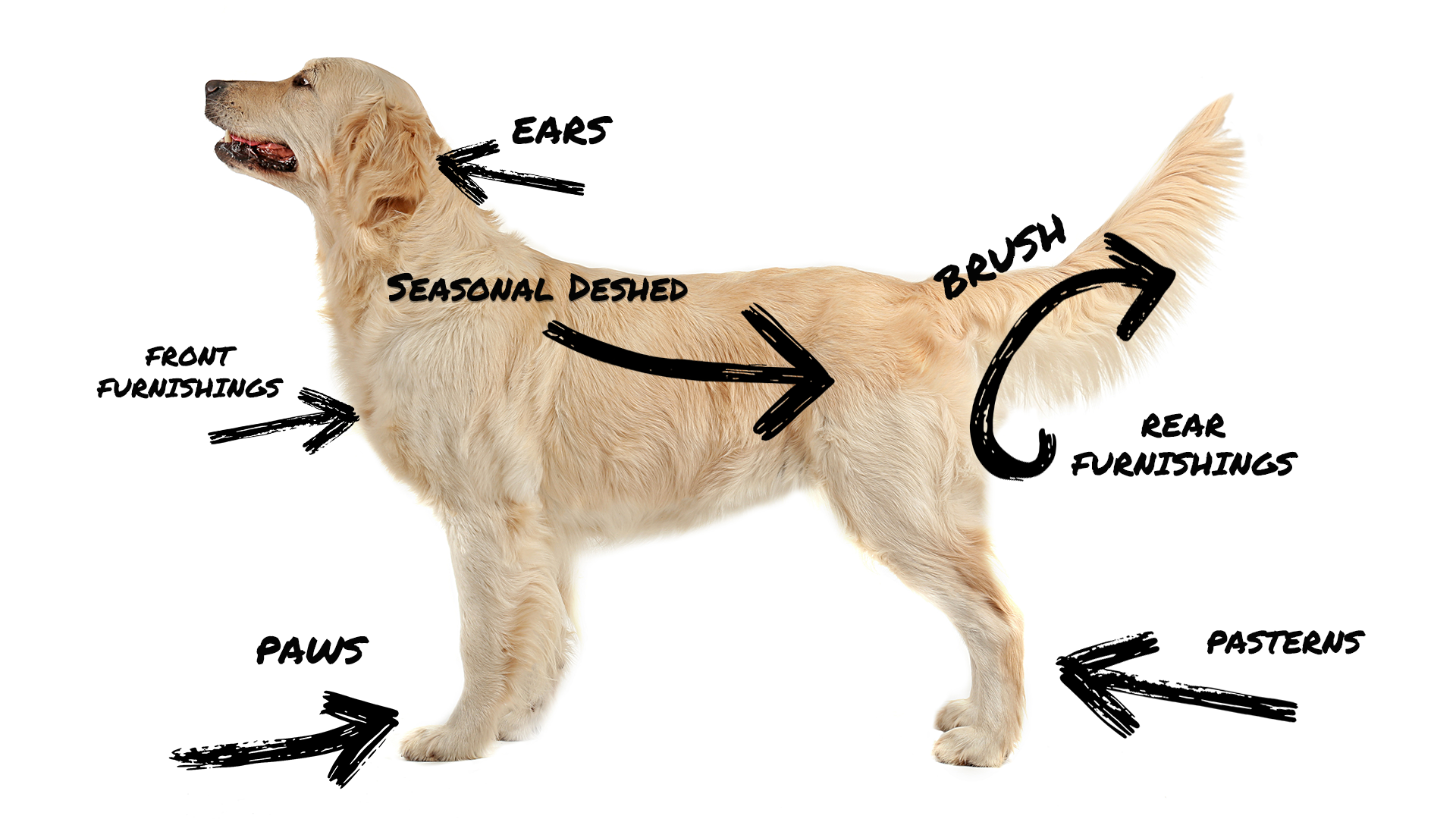
- Brush regularly to remove loose undercoat
- Keep the coat clean
- Remove mats before they tighten
- Provide shade
- Offer plenty of fresh water
- Avoid strenuous exercise during the hottest part of the day
A well-maintained double coat allows air to circulate much more effectively than a dirty, compacted coat.
Why Shaving a Double-Coated Dog Can Be Harmful
Shaving a natural-coated dog doesn’t simply remove hair—it interrupts the coat’s natural growth cycle.
Many owners don’t realize that once a double coat is shaved, it may not grow back the same way.
Possible problems include:
- Patchy regrowth
- Uneven texture
- Cottony or fuzzy undercoat
- Loss of protective guard hairs
- Increased matting
- Poor temperature regulation
- Greater risk of sunburn
Some dogs recover completely after one shave, while others experience permanent coat damage known by groomers as coat funk or post-clipping alopecia, depending on the breed and underlying cause.
Because there’s no reliable way to predict how an individual dog’s coat will respond, professional groomers generally recommend not shaving healthy double-coated breeds.
Single-Coated Dogs Are Different
Some dogs have coats that continue growing throughout their lives.
These breeds require regular haircuts because their hair behaves much more like human hair.
Examples include:
- Poodles
- Goldendoodles
- Labradoodles
- Bernedoodles
- Maltipoos
- Cockapoos
- Portuguese Water Dogs
- Bichon Frises
- Soft Coated Wheaten Terriers
For these breeds, shorter summer haircuts can be an excellent option.

A shorter coat:
- Dries faster
- Is easier to brush
- Reduces matting
- Makes daily maintenance easier
- Helps owners monitor the skin
Notice we said short haircut, not necessarily shaved.
Whenever possible, leaving a small amount of coat provides important protection against sunlight and environmental exposure.
For many dogs, a blade leaving ¼ to ½ inch of coat offers an excellent balance between comfort and protection.
Does Short Hair Mean Less Heat?
Not always.
Dogs cool themselves primarily by:
- Panting
- Releasing heat through their paw pads
- Blood vessel expansion around the ears and face
Their coat plays only part of the equation.
A dog with a short haircut can still become overheated if they:
- Stay outside too long
- Lack fresh water
- Exercise during peak heat
- Sit in direct sunlight
- Remain inside a hot vehicle
No haircut can replace proper summer heat safety.
What If Your Dog Has to Be Shaved?
Sometimes shaving isn’t optional.
Professional groomers and veterinarians occasionally must shave dogs because of:
- Severe matting
- Surgery
- Skin disease
- Hot spots
- Veterinary treatment
- Injuries
If mats are tight against the skin, trying to brush them out can be extremely painful and may even tear the skin.
In these situations, shaving is often the kindest and safest choice.
The good news?
Hair usually grows back.
It simply needs a little extra protection while doing so.
Protecting a Shaved Dog
Without their natural coat, dogs become much more vulnerable to the environment.
Pay special attention to:
Sun Exposure
Freshly shaved skin burns much more easily.
Limit outdoor time during peak afternoon heat and seek shaded areas whenever possible.
Ask your veterinarian about a dog-safe sunscreen if your dog spends time outdoors.
Never use human sunscreen unless specifically directed by your veterinarian, as some ingredients can be toxic if licked.

Hot Surfaces
Without insulating fur around the legs and feet, heat can feel much more intense.
Check pavement temperatures before walks.
If it’s too hot for your hand after seven seconds, it’s too hot for your dog’s paws.

Musher’s Secret Dog Paw Balm, Hot Pavement, Ice & Salt Protection, 454g | All-Natural Paw Balm, Lick-Safe & Non-Toxic Dog Paw Moisturizer for Dry, Cracked Paws, Dog Paw Wax with Vitamin E
Insect Bites
Mosquitoes and other insects can more easily reach exposed skin.
Avoid areas with heavy insect activity and consider protective clothing if recommended by your veterinarian.
Abrasions
Dogs that enjoy rolling in grass, hiking, or playing outdoors may experience more scratches on freshly exposed skin.
Watch for irritation and allow the coat time to regrow.
Helpful Products for Shaved Dogs
If your dog has been shaved, these products can make the recovery period much more comfortable:
Dog Sunscreen
Designed specifically for pets, sunscreen helps protect exposed skin from harmful UV rays.
Cooling Vest or Cooling Harness
These products use evaporative cooling to help regulate body temperature during outdoor activities.

Spark Paws Dog Cooling Vest – SPF 50 UV Sun Protection – Summer Heat Relief Gear for Dogs, Lightweight, Evaporative Cooling – Dog Anxiety Relief Vest During Hot Days
Cooling Mat
Perfect for indoor use, cooling mats provide a refreshing place to rest without requiring refrigeration or electricity.
Cooling Blanket
Cooling blankets offer lightweight comfort while helping dogs stay comfortable during warm weather.
UV-Protective Clothing
Specially designed shirts can protect shaved dogs from sunburn while still allowing airflow.
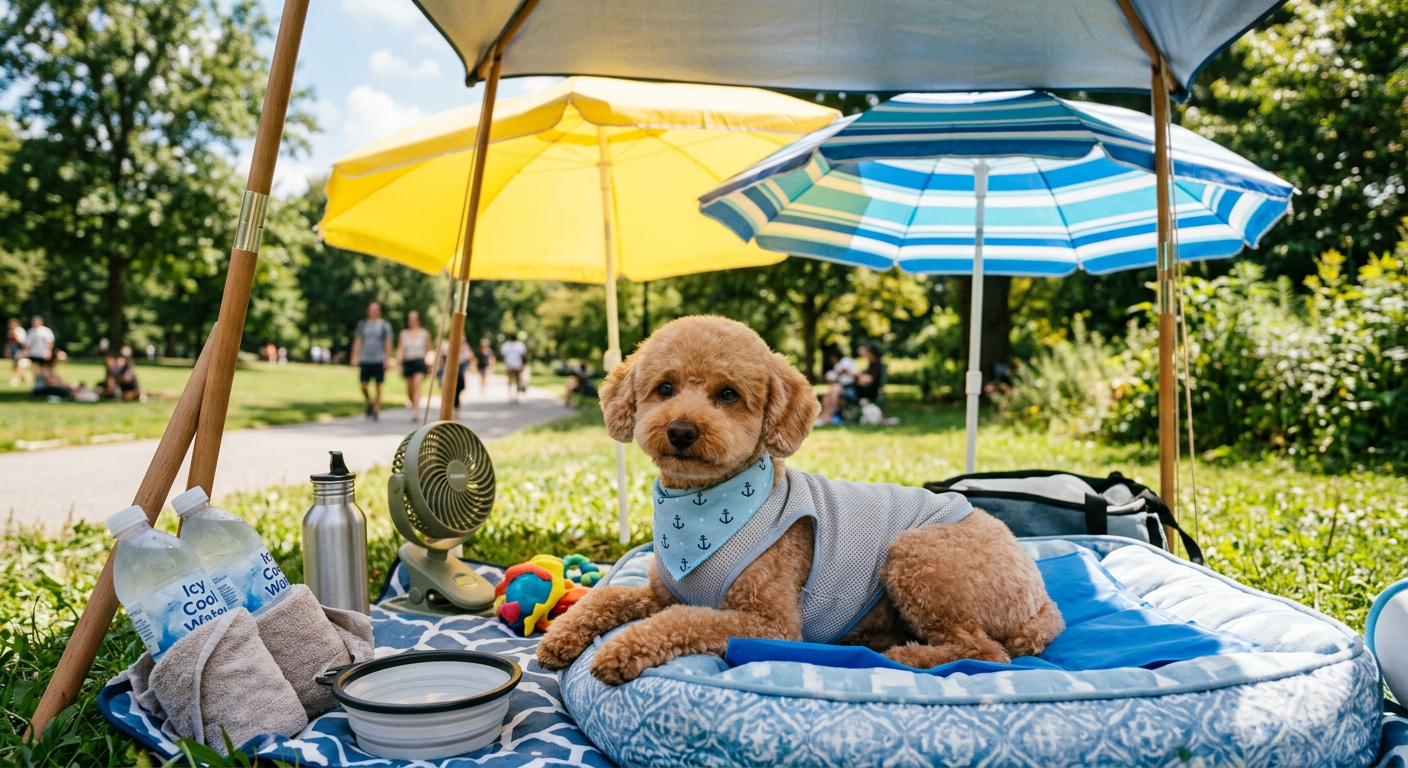
Portable Umbrella or Shade Tent
Creating instant shade can dramatically reduce your dog’s exposure to direct sunlight during walks, sporting events, or outdoor gatherings.
S/M/L Outdoor Raised Dog Cot with Canopy & Side Shade – Portable Cooling Elevated Dog Bed for Camping Beach (with Carry Bag)

Summer Heat Safety Tips
Regardless of your dog’s coat type, remember these simple summer safety rules:
- Always provide fresh, cool drinking water.
- Walk early in the morning or later in the evening.
- Never leave your dog inside a parked vehicle.
- Brush regularly to remove loose hair and prevent matting.
- Keep dogs in shaded or air-conditioned areas whenever possible.
- Watch closely for signs of overheating, including excessive panting, drooling, weakness, vomiting, or collapse.
Final Thoughts
To review, when it comes to summer grooming, every dog is different.
For double-coated breeds, the healthiest approach is usually to preserve the natural coat while keeping it clean, brushed, and free of mats. Their coat is already doing an excellent job of regulating temperature and protecting the skin.
For single-coated breeds and breeds with a light undercoat, like Poodles and many Doodle mixes, a shorter haircut can make summer grooming much easier—but even then, shaving isn’t always necessary. Leaving a protective layer of hair helps shield the skin from the sun and other environmental hazards.
If your dog ever needs to be shaved for medical reasons or severe matting, don’t worry. With a little extra care, sun protection, and patience, the coat will usually grow back beautifully.
The best summer grooming isn’t about removing as much hair as possible—it’s about understanding your dog’s unique coat and working with nature instead of against it. Happy Grooming!
#petgroomingpost
Sources
- American Kennel Club (AKC). Should You Shave Your Dog in the Summer? https://www.akc.org/expert-advice/health/should-you-shave-your-dog-for-summer/
- American Veterinary Medical Association (AVMA). Warm Weather Pet Safety. https://www.avma.org/resources-tools/pet-owners/petcare/warm-weather-pet-safety
- Cornell University College of Veterinary Medicine. Heat Stroke in Dogs. https://www.vet.cornell.edu
- VCA Animal Hospitals. Coat Care and Grooming for Dogs. https://vcahospitals.com/know-your-pet/grooming-and-coat-care-for-your-dog
- Humane Society of the United States. Keep Pets Safe in Hot Weather. https://www.humanesociety.org/resources/keep-pets-safe-heat
Helpful videos on the subject:

Leave a Reply